Cancer Genetics
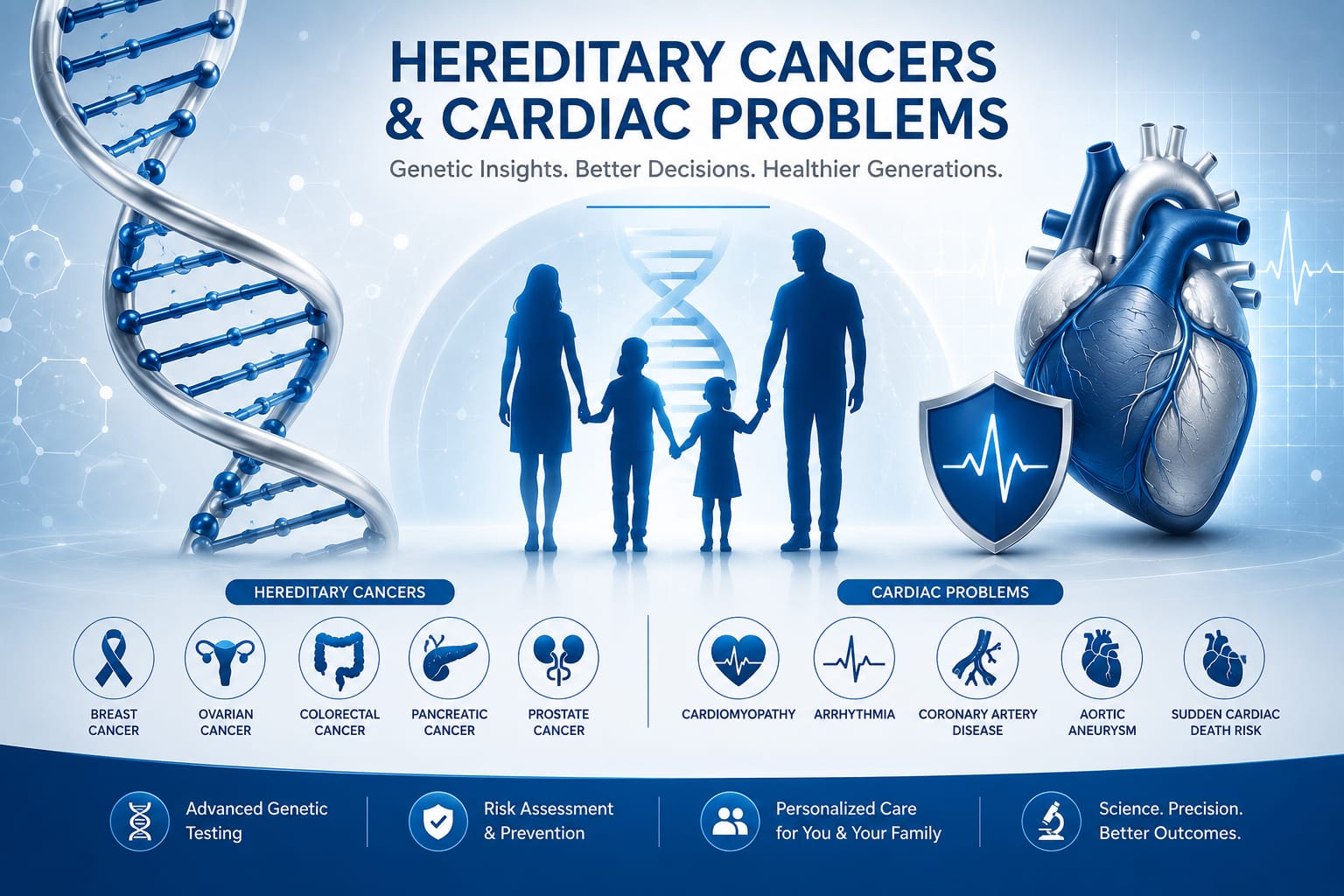
Hereditary Cancer Genetic Testing Right for You?
Most cancers happen by chance or due to lifestyle and environmental factors over time. However, about 5% to 10% of all cancers are hereditary, meaning they are caused by an altered gene passed down from a parent to a child.
Genetic testing scans your DNA to find these inherited changes, giving you and your healthcare team a roadmap to prevent, detect, or treat cancer much earlier.
Who Should Consider Genetic Testing?
Genetic testing isn’t necessary for everyone. Healthcare guidelines generally recommend testing if your personal or family medical history includes specific “red flags” as mentioned below
- Early-Onset Cancer: A family member diagnosed with cancer at an unusually young age (e.g., breast or colon cancer before age 50).
- Multiple Primary Cancers: The same relative develops more than one type of cancer (e.g., both breast and ovarian cancer).
- Rare Cancers: Diagnoses of rare cancers within the family, such as male breast cancer or pancreatic cancer.
- Clustering: Multiple close relatives on the same side of the family with the same or related types of cancer.
The Genetic Testing Process
Discovering your hereditary risk involves a structured, step-by-step process to ensure you get accurate answers and clear emotional support.
- Pre-Test Genetic Counseling: Initial Assessment.
Meet with a Genetic Consultant. They will map out your family health history, determine if testing is medically necessary, and help choose the right test panel. - Sample Collection: Quick & Non-Invasive.
Your DNA is collected using either a simple blood draw or a saliva kit. The sample is then sent to a specialized, certified laboratory. - Laboratory DNA Sequencing:
The lab analyzes specific genes or multi-gene panels to check for mutations or pathogenic variants in your genetic code.
- Post-Test Results Review with Genetic Consultant to discuss the odds of risk of having cancer and treatment options
Other Services
Laboratory Set Up
Read More
Fatloss & Personalised Nutrition
Read More
Geriatric Wellness
Read More
Pharmaco Genetics
Read More
Genetic Disorder Diagnostics
Read MoreNeed Consultation?
Speak with our genetic experts today to understand what's right for you.
Contact Us